
Swing-out vs Angle Rotor: Which Do You Need?
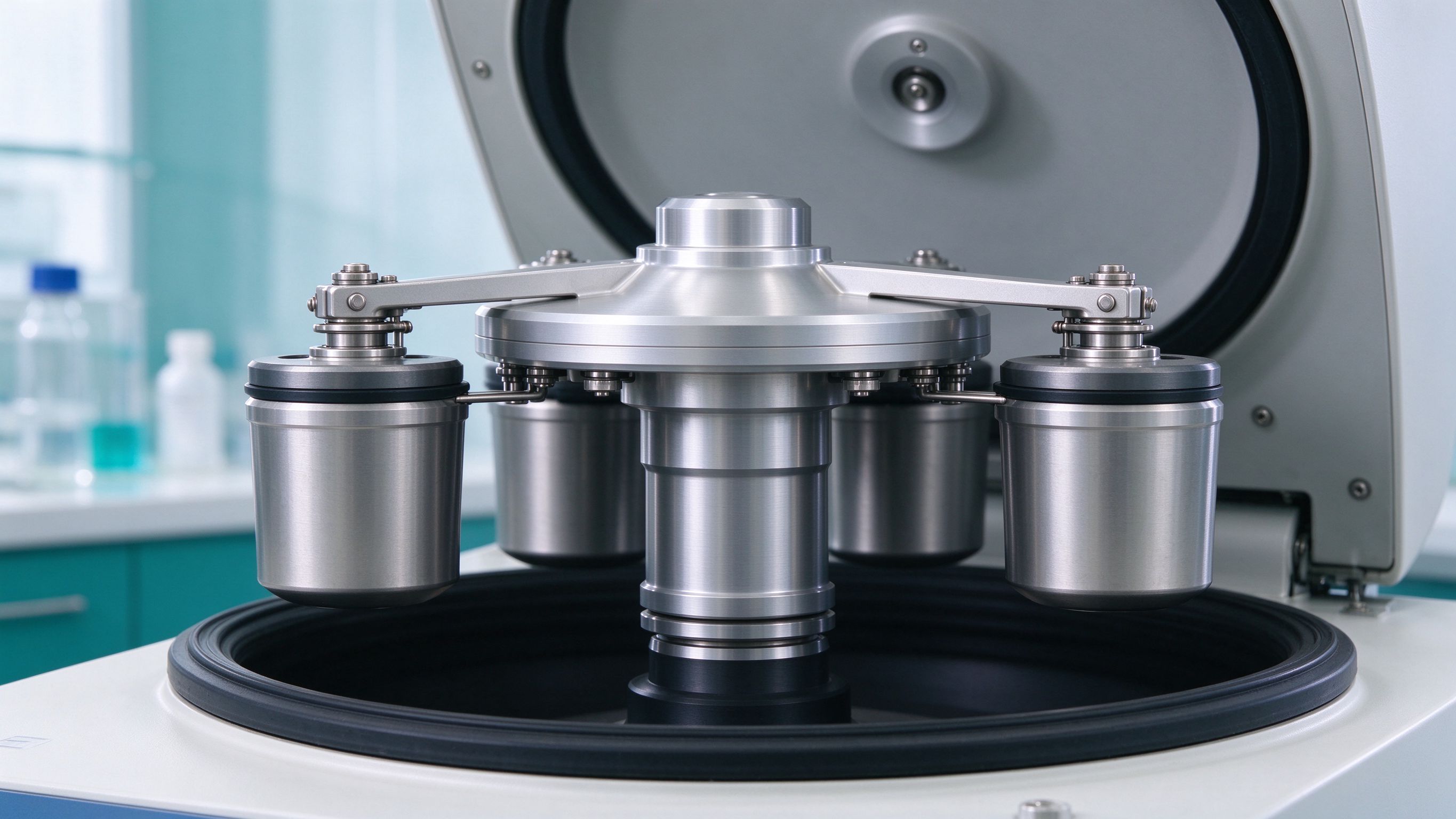
01.Start with your applications
Centrifuges are often sold as "3,000 RPM" or "5,000 RPM" machines, but the rotor is the component that actually holds your tubes and shapes how the forces act on the sample. Two designs dominate benchtop labs.
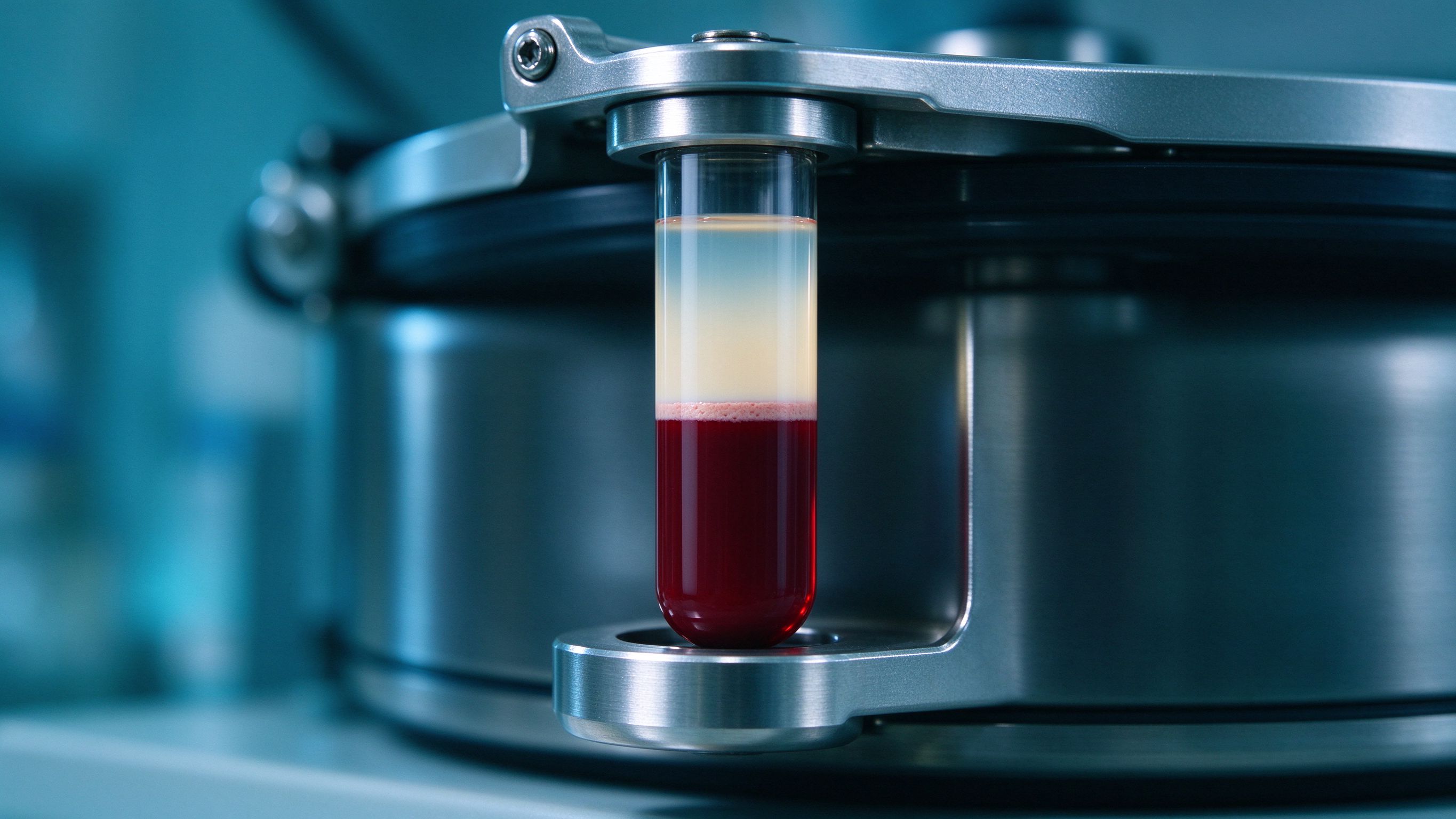
Swing-out (bucket) rotor The tube holders hang freely in buckets. At rest they point down; as the rotor spins, the buckets swing out to a near-horizontal position. The force pushes sample straight down the tube, producing clean, horizontal layers (plasma / buffy coat / red cells) and a pellet at the very bottom.
Fixed-angle rotor Tubes are clamped at a fixed angle (usually 20–45°). The force pushes material toward the outer wall of the tube, not the bottom. Pellets slide down the angled wall and collect as a compact button, and spins can run faster with less imbalanced vibration.
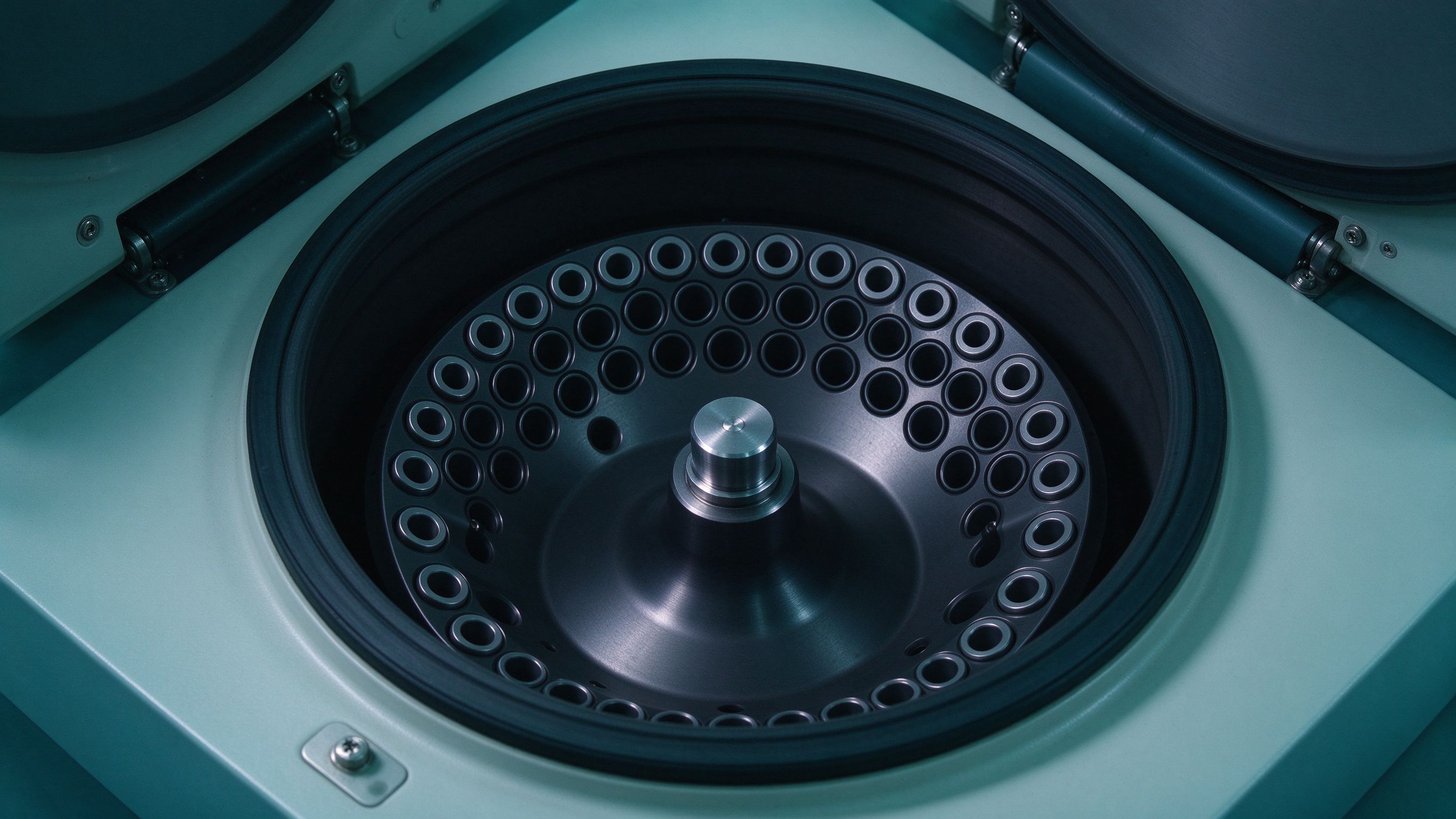
02. When to use which
- Swing-out wins for — blood and serum/plasma separation, PRP, density-gradient media, cell culture plates, and any protocol where you need clean, easy-to-pipette layers.
- Angle wins for — high-speed pelleting (bacteria, yeast, subcellular organelles), small-volume microtubes, quick spins, and high-RCF molecular work where a compact wall pellet is fine.
03. Side-by-side comparison
| Dimension | Swing-out | Angle |
|---|---|---|
| Layer quality | Clean horizontal bands | Layers tilted, harder to pipette |
| Pellet location | Bottom of tube | Outer wall |
| Typical max RCF | Lower (3,000–6,000 g) | Higher (up to 20,000+ g) |
| Plate / multi-tube | Plate buckets available | Rare |
| Throughput | High, easy loading | Fast spins, fewer adapters |
| Best for | Blood, PRP, cell separation | Molecular pelleting, microtubes |
04. The adapter detail most people miss
A swing-out rotor's buckets are not universal. You need the right insert (adapter) for each tube diameter — a 5 ml vacutainer and a 15 ml conical need different sleeves, and a loose tube will leak or break under force.
- List every tube size you actually run (e.g. 5–10 ml vacutainer, 15–20 ml conical, 1.5 ml microtube).
- Ask the supplier which adapters are included and which are sold separately.
- Confirm positions per bucket — e.g. ≥12 positions for 5–10 ml inserts, ≥6 positions for 15–20 ml inserts.
- Remember "per bucket": total capacity = positions × number of buckets (commonly 4).
Short version: if your work is clinical blood, serum, or PRP, start with a swing-out rotor and buy the right adapters. If it is molecular pelleting in small tubes, an angle rotor is faster and cheaper.
Recommended models

- Max Speed6000rpm
- Max RCF5502xg
- Capacity750mlx4

- Max Speed5000rpm
- Max RCF3130xg
- Capacity15mlx12

- Max Speed6000rpm
- Max RCF5502xg
- Capacity100mlx8
Need help choosing a centrifuge?
Send us your protocol — engineers reply within 24 hours with a model recommendation.
Request a Quote